



 Select Store
 EU
EU
 US
US
Search results
46 results

Your First Big Championship Checklist
There's something truly special about a sailing championship. It's more than just a regatta; it's an opportunity to challenge yourself, explore a new venue, and become part of a community that shares your passion for sailing. Whether you’re fizzing with excitement or feeling super nervous, good preparation can make all the difference.
This guide has been put together to help you arrive prepared, confident, and ready to make the most of every moment. The better prepared you are, the more you'll be able to focus on what really matters – enjoying the experience, learning from every race, and creating memories that you'll look back on for years to come.
Give your boat a thorough MOT
We’ve pulled together this basic list below; it’s not an exhaustive list, and it’s not class specific, but it’s a fantastic place to start. You’ve been training hard all winter, so it’s time to get your boat back on point for its Championship showcase.
If you discover an issue and aren't sure how to fix it, don't panic. Your Class Association community is often the best place to start. Class sailors and coaches have a wealth of experience and can usually offer practical advice or point you towards the manufacturer or class-approved hacks.
The Team at Rooster are always on hand to help, and true to our heritage, the team love nothing more than bimbling with boats and looking for those small wins to allow you to be in your element. Whether you need advice on maintenance, replacement parts, or essential spares, get in touch; we'd be delighted to help you arrive at the championship feeling ready to perform at your best!
Category
Subcategory
Check Item
Hull
Structure
Give the hull a good once-over and look out for any cracks.
Hull
Structure
Check the mast step for cracks or anything that doesn't look quite right.
Hull
Structure
Look for scratches, cracks or peeling grip around the centreboard case.
Hull
Finish
Tidy up any chips and scratches before they get worse.
Hull
Finish
Make sure the self bailer opens and closes smoothly and isn't full of grit.
Hull
Finish
Check your bung is in good condition and throw a spare in the toolbox.
Spars
Mast
Sight up the mast and make sure it's nice and straight.
Spars
Mast
Check fittings and rivets for corrosion, movement or wear.
Spars
Mast
Make sure all mast sections fit together snugly.
Spars
Boom
Check fittings and rivets are secure and corrosion-free.
Sail
Panels
Hold the sail up to the light and look for holes, tears or thin patches.
Sail
Stitching
Check seams are intact and not starting to pull apart.
Sail
Battens
Make sure battens are undamaged and seated properly.
Rigging
Halyard(s)
Look for worn spots, fraying or damaged rope.
Rigging
Mainsheet
Check for wear and any sections that feel tired.
Rigging
Jib Sheet
Make sure it's running smoothly and isn't showing signs of wear.
Rigging
Spinnaker Sheet
Make sure it's running smoothly and isn't showing signs of wear.
Rigging
Controls
Check the kicker is working smoothly and still bites.
Rigging
Controls
Make sure the outhaul runs freely and holds tension.
Rigging
Controls
Check the downhaul isn't worn and can be adjusted easily.
Rigging
Controls
Make sure the traveller isn’t wearing through.
Rigging
Painter
Check for wear and confirm it complies with class rules.
Rigging
Clew Strap
If the velcro is slipping, it's time for a replacement.
Rigging
Blocks
Spin every block and make sure ratchets still sound and feel healthy.
Centreboard
Foil
Check the leading edge for chips, dings or rough spots.
Centreboard
Foil
Make sure the trailing edge is smooth and undamaged.
Centreboard
Case
The board should go up and down smoothly without sticking.
Centreboard
Elastic
Make sure the elastic still has enough life to do its job.
Rudder
Blade
Check for damage, chips or rough areas.
Rudder
Stock
Make sure all fittings are secure and in good condition.
Rudder
Tiller
Look for cracks or sun damage in the universal joint – they often fail without warning.
Toe Straps
Webbing
Check for wear where straps rub and inspect all fixings.
Toe Straps
Elastic
Make sure the straps still spring back into position.
Fasteners
Hardware
Check screws are tight and haven't worked loose.
Fasteners
Hardware
Check bolts are secure and corrosion-free.
Fasteners
Hardware
Fresh tape always looks smarter and makes spotting problems easier.
Buoyancy
Hatches
Check seals are clean and keeping water where it belongs.
Buoyancy
Buoyancy Bags
Inflate them and make sure they're holding air properly.
Buoyancy
Leak Test
A bubble test can uncover leaks before they become a headache.
Trolley
Frame
Look for rust, corrosion or signs of fatigue.
Trolley
Wheels
Check tyres are inflated and ready for a long walk to the slipway.
Trailer
Bearings
Give them a check now rather than on the hard shoulder later.
Trailer
Lights
Test everything before setting off.
Trailer
Straps
Make sure straps are in good condition and still doing their job.
Measurement
Class Rules
Double-check sail numbers are correct and clearly visible.
Measurement
Class Rules
Make sure all required equipment is onboard and class legal.
Get the right gear
The right kit really makes all the difference on the water, and the beauty of British weather means you can launch in a sublime summer's day and be chewing through a hail storm as the four minute gun goes for the start of race three. Staying warm, protected, and comfortable means you can focus on performance — and staying out for longer.
We’ve tried to take all the faff out of packing your kit bag and created these handy what to wear guides, from Juniors through to trapezing, there’s something for everyone
Pack the opposite kit in your dry bag in your boat; if you’ve launched in glorious sunshine, make sure you’ve got a lightweight spray top and beanie you can pop on if that sea breeze kicks in or you have an accidental capsize. On the flip side, if you launch in a cosy Aquafleece, make sure you can pull it off in between races, if that sunshine does show its face. Top it off with a cap, with an epic pair of sunglasses and a slathering of suncream.
It can be really tempting to pop all your spares in a support rib, but it’s not always possible to find them in between races, even with the most attentive crew. So, keep those essential bits of kit and fuel close in a little dry bag in your boat, so you’re not caught short! Hangry and freezing is not the way to spend a day.
Don’t forget on shore too; changing rooms at big championships can be manic. Write your name on every single bit of kit you own and consider al fresco changing alternatives, like a quick dry poncho and a changing mat if you’re not a fan of the crowds.
Spares
After you’ve read this blog, your boat will be MOT’d and bimbled to perfection before your regatta, but breakages do happen, even to the most prepared sailors. Either tucked in your buoyancy aid, or safely stowed in your boat, we’d suggest always having these two secret weapons.
Small Carbine Hook – Shackle gone? Bosh clip it back on.
Rope that is 1.5 metres long, around 3/4mm - tie something back together, it won’t be pretty, but it will get you round.
Breakages are great challenges to overcome, but it’s good to practice them in a low stress environment. What would you do if your mast webbing strap failed on your topper? Or if your kicker clip blew up on your RS Tera? Have a go on shore, and then on the water, testing how you could bodge a fix, it could save you a big point discard or even better, you could help a friend on the water.
Fuel
Eating and drinking the right things before, during and after racing will help you stay focused, make better decisions, and maintain your energy throughout the duration of the regatta.
Before heading afloat, aim to eat a balanced meal containing slow-release carbohydrates such as porridge, wholegrain toast, cereal, or pasta. These foods provide a steady source of energy that will last longer than sugary snacks.
Hydration is equally important and an easy to sip on the go bottle is essential. Start drinking water as soon as you wake up and continue throughout your morning preparations at your accommodation and in the boat park. Even on cooler days, it's easy to become dehydrated without realising it, which can affect concentration and performance. A very simple rule of thumb is that you should be drinking approximately 1 litre for every race you do. This isn’t foolproof, so please adapt it for your needs and the conditions on the day.
For longer days, pack simple snacks that are easy to eat between races. Bananas, flapjacks, cereal bars, dried fruit, wraps or a sandwich are all great choices. These provide quick energy without causing a sugar crash. Try to avoid relying completely on sweets, chocolate and energy drinks. While they may give a short burst of energy, they can leave you feeling tired later in the day. With everything in life, there’s a balance to be found, make sure you’re excited to tuck into something tasty between races.
Remember: good sailors look after their boats, but great sailors also look after themselves. Fuel your body well, and you'll give yourself the best chance of performing at your best on the water.
Relish the detail by doing your homework
One of the easiest ways to gain confidence before your first championship is to arrive as prepared as possible. Long before you launch your boat, there is a huge amount of information available online that can help you understand the event and venue. Start by reading the Notice of Race and Sailing Instructions so you know the format, schedule, and key rules. Watch any competitor briefings if they are available and take note of local advice.
Explore the venue on Google Maps to familiarise yourself with launching areas, race courses, parking, and facilities. Check out the club and class websites to learn more about the venue, local conditions, and previous events. You can even use Google or ChatGPT to research typical weather patterns, tides, currents, and sailing tips for the area. Did you know we have some of our own venue guides by the legendary Steve Cockerill and our fantastic Rooster Riders? If you’re heading to Weymouth, Largs or Pwllheli this summer, you’re in luck! The more you know before you arrive, the less there is to think about when racing starts.
Good preparation won't guarantee results, but it will help you feel confident, organised, and ready to make the most of your championship experience.
Set goals that you can control
Attending your first championship is exciting, but it's important to remember that success isn't just about where you finish. Rather than focusing on winning, set yourself SMART goals; goals that are Specific, Measurable, Achievable, Relevant, and Time-bound. For example, you might aim to get a front row start in at least three races, change your settings on every leg of the course, or not to be the outside boat at every mark rounding.
These are things that are within your control and can be measured throughout the event. By focusing on personal performance goals rather than results, you'll gain confidence, learn more from the experience, and finish the championship with a real sense of achievement, regardless of your overall placing.
And finally
Above all, have fun. Throw yourself into the experience, make some new sailing mates, and try to enjoy every minute both on and off the water. There will be plenty to learn, plenty to laugh about, and hopefully a few adventures along the way. Sail your best, embrace the challenge, and make some awesome memories you'll be talking about for years to come.

RS Aero Over Deck Rigging
POST VIDEO NOTE: Please use a separate piece of short grey line in the Rooster kit to attach the two blocks to the traveller eye. see image below: This is to stop any chance of the two blocks and their 3mm elastic from tensioning the traveller in any way. This was required by measurement at the 2018 World Championships.
The story:
During the recent RS Aero World Championships, it became apparent that if I wanted to release the controls downwind efficiently that I would need to change the control lines to over deck take up style. The old style tended to get a little tangled downwind:
I was inspired by Steve Norbury's version that I had seen at the Aero Southern Championships which I knew was class legal. Obviously, I have put some of my splicing experience into the kit to fasten the two Ronstan Shock Blocks in place and used Rooster's EasySplice™ Continuous Control Line as it's just so easy! I used the Ronstan Shock Blocks as they can be colour co-ordinated and are very light - which I guess is nice as the boat is so nice and light. I also used Selden 30mm Loop Top Blocks for the take ups. They are also lighter and more than man enough for the job.
Rooster has produced a kit with most of the splicing done, all you will have to do is 'cow splice' the Ronstan Shock Blocks onto a pre-made double loop 180mm line under the deck. But if you are feeling brave, take a look at the related Rooster Videos on Splicing (Reverse Brummell Hitch, Spectwelve and Rooster EasySplice™ Continuous Control Line). We suggest you use 2mm Spectwelve (an SK78 12 braided Dynema) for the take-up tidies and Rooster 4mm Spectwelve (an SK78 12 braided Dynema) for the traveller. You will also notice that I have adopted the Rooster colours which have been used extensively in singlehanded sailing with blue for downhaul/ Cunningham, grey for outhaul and red for kicker or vang. Feel free to take the parts and ropes in the colours you are used to.
I used 5m of EasySplice™ for the outhaul system, although I did not have much line to spare so perhaps it's worth taking 6m and losing a bit. Our kit is now 5.5m so you will need to first ensure your outhaul is maximum off.
Then join the outhaul when it can just go in front of the centreboard case with a little movement.
For the downhaul, I used 8m of EasySplice™, plus 1m of 2mm Spectwelve for the two side deck tidy's and 1m of 4mm Spectwelve for the traveller.
Tools: I like my tools so I tend to try and use them all. But if you are keen to do the whole thing yourself then you will need:
Serrated Scissors
2/3mm Pull Fid
4mm Push fid
Rooster EasySplice™ Needle Fid (I use the super thin needle for the EasySplice™ Control Line splice).
Needles and Waxed Whipping Twine (available on the Rooster website to finish off the joins in the control line.)
If you purchase the kit, then you will only need the EasySplice™ Needle Fid, twine and needle, although I am sure you would still find the Serrated Scissors useful.
Splicing Tip When you cut the centre core out of easy splice, leave it as loose as possible. This will enable the other line to pass into it easier. Do not try and milk it to make it smaller as this will make it harder to pull the other end through it.
RS Sailing is the most forward-looking company I have ever been close to. I understand that they will be stocking these 'Rooster' upgrade kits in due course. I think it will make a significant difference to your Aero sailing enjoyment - if it could get any better!
Save Save

Sailing Through Barriers: The Power of Using Sign Language
Have you ever wondered what it may be like to sail with no hearing and having to rely on your other senses? For many deaf sailors, sailing may seem virtually impossible due to a multitude of barriers; from everyday sailing to races.
However, through the work of the deaf sailing community, deaf people have gathered together to work through these challenges and obstacles and with GBR Deaf Sailing, we work to influence change amongst local sailing clubs and to build accessible pathways; enabling deaf people to be treated as equal sailors.
You may often wonder, how do deaf people communicate when sailing, or perhaps what can clubs do to be more inclusive?
For deaf people, like any other sensory losses, your other senses are heightened which can be seen as an advantage, a tool within our armour. Deaf people typically have heightened senses with their eyes, therefore when it comes to sailing, they tend to be more observant to their surroundings and may pick out on the smallest of visible changes quicker than others.
When it comes to sailing amongst crews, communication is vital. Many deaf sailors do not sail for obvious reasons with their hearing aid or implants. When sailing in a group of deaf people, there isn’t the ability to speak/shout whilst under sail or in race mode, this can make it extremely more challenging especially if deaf crews use sign language to communicate or perhaps lip read one another. This often means there are times whereby hands need to be freed to sign and you may see the odd rope in the most strangest of places!
As crews, we come up with effective forms of communication that takes some time to learn and to master, for example should crews not be able to gauge a sense of action through the natural art of sailing, there are certain hand-signals or types of taps to the hull used. However each helm, will have different ways of communicating, based on my own helming style, my typical communication methods are;
To obtain an immediate action would be a series of hard bangs to the hull in order to act fast or to get everyone’s attention.
When it comes to a marker and a tack/gybe, a series of three bangs to the hull in a timed sequence; 1 - ready about, 2 - close to mark, 3 - action
Hand signals; A circular motions up in the air with the index finger - to signify the movement of upwards or downwards actions and also the speed of the motion signifies the speed. For example releasing or taking down the spinnaker, a fast clockwise motion would signify a quick release, anticlockwise would mean to take down (opposite direction).
When racing, using numbered signs is key for timed sequences, for example a count down of 5, 4, 3, 2, 1 using your fingers.
Racing for deaf crews can be challenging, however Rooster’s shop enabled deaf crews to purchase limited edition optimum watches which has vibration settings - this is a life saver for deaf sailors.
As you can see there are a number of ways of communicating on board without the use of speech, this list could be endless, however summaries some of the examples when it comes to sailing.
What could clubs do to be more inclusive?
When it comes to races and events, we ask for a time-pace keeper to assist with the time sequence, this enables deaf crews to follow the sequence of a klaxon / horn. This is where someone would signal a 3, 2, 1 before a klaxon / horn in order for the crew to set their timers in line with the sequence.
We also ask for clubs to give considerations to use of flags and communication tools - thinking about the effective uses of these - not all clubs use flags in this way. Clubs are encouraged to work with deaf sailors to make minor tweaks and adaptions - for example a warning signal in order to get ready, using a pre-agreed flag that is waved at the same time as the signal is sounded.
Clubs have opted to use strobe lights as well as klaxon / horns, however the colour and size of the strobe is key in order to aid in the visibility of this.
GBR Deaf Sailing welcome clubs or individuals who want to know more about how to be more inclusive. For more information or tips please contact daniel14clements@gmail.com
Article written by Daniel Clements
GBR Deaf Sailing - Sailor and Committee member
Announcing Our Class & Club Partnerships for 2025
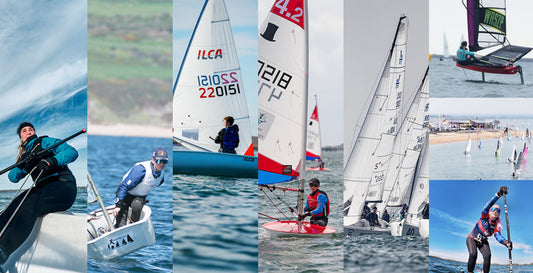
We’re kicking off the 2025 season with some exciting news — Rooster is partnering with a fantastic line-up of classes, clubs, and teams across the globe to support the sailors and events that make our sport so special.
Some of these partnerships are long-standing collaborations we’re proud to continue. Others are brand new for 2025, marking fresh connections with organisations doing brilliant work in their communities. Whether it’s powering young Optimist sailors or backing world-class racing fleets, we’re here to support performance, progression, and fun on the water.
Here’s who we’ll be working with this season:
🌎 International Youth Teams
🇺🇸 USODA National & Development TeamsOur continued partnership with the United States Optimist Dinghy Association helps support junior sailors at every level of the Optimist pathway in the US.
🇺🇾 AUDO Uruguayan Optimist National TeamNew for 2025! We're thrilled to be backing Uruguay’s top young Optimist sailors as they take on regional and global competition.
EU EURILCA Solidarity ProgrammeInvolving every nation—igniting the next wave of young sailors.
🇬🇧 UK Class Partnerships
RS Tera UK ClassSupporting the next generation as they learn the ropes, build confidence, and discover the thrill of racing.
RS Feva UK ClassOne of the UK’s most vibrant youth fleets — we’re proud to keep supporting this fun, fast, and friendly class.
ITCA UK (Topper Class)A class close to Rooster’s roots, and still one of the best starting points for young racers.
ILCA UK ClassFrom youth to Masters, the ILCA fleet is one of the most competitive in the world — and we’re excited to continue our support.
RS Aero UK ClassLight, fast, and full of energy — the RS Aero class continues to grow, and we’re proud to be part of that momentum.
J-70 UK ClassNow in our third year of partnership, the J-70 fleet continues to deliver top-tier keelboat racing across the UK and Europe.
RS Class AssociationAn ongoing collaboration with the RS Class Association who support a wide range of RS fleets. Through initiatives like the RS National Tour and major class events, the association drives competitive yet friendly racing across the UK — and we’re proud to be along for the ride in 2025.
GBR Blind SailingContinuing our support of this brilliant organisation, which opens up competitive sailing to blind and visually impaired sailors. Their work is a powerful reminder that sailing can – and should – be for everyone.
GBR Deaf Sailing We're excited to welcome GBR Deaf Sailing to our partner community. Their work to create more inclusive opportunities and raise awareness for deaf sailors aligns with our belief that everyone deserves the chance to thrive on the water.
Wetwheels HambleWe’re proud to support Wetwheels Hamble, a charity delivering fully accessible powerboating experiences for disabled people, helping more individuals enjoy time on the water.
🌊 Expanding Across Watersports
GBSUPNew for 2025! We’re excited to partner with Great Britain Stand Up Paddleboarding as the sport continues to grow across the UK.
Magenta Foiling TeamAlso new this year, we’re proud to support this pioneering project empowering women in high-performance and foiling sailing.
⛵ Club Partnerships
Hayling Island Sailing Club (UK)A legendary venue on the UK circuit — we’re looking forward to a big year of racing and community at HISC.
Royal Nova Scotia Yacht Squadron (Canada)One of Canada’s most historic sailing clubs, now part of the Rooster family for 2025.
Why It Matters
Luke Morrison, CEO at Rooster explains:
"These class and club partnerships are the heartbeat of Rooster’s approach to supporting the watersports community. Whether we’re kitting out a national team or backing the growth of club racing, we’re proud to provide the gear that helps sailors push their limits and enjoy the sport to the fullest."
We’ll be sharing updates, behind-the-scenes content, and sailor stories from our partners throughout the season — so keep an eye on our socials and tag us when you’re out there racing in Rooster gear!
@Roosterkit
#RoosterKit #InYourElement

Gear Up: Your Essential Kit Guide for Summer Sailing Champs
Summer sailing and regattas often mean long hours on the water — sometimes with three or more races back to back. If you’re new to it, or haven’t raced in a while, knowing what to wear or take with you can feel overwhelming. For the seasoned sailor, it’s often second nature — but even the most experienced can get caught out when they’re a bit rusty or just haven’t had to prep for a full championship day in a while.
Even simple logistics can throw you off: can you drop a drybag on a rib? If so, great — you have more flexibility. But if you’re scrambling to find that rib between races or the next warning signal goes up right after the finish, you could be left without the gear you were counting on.
Just like any endurance sport, sailing demands planning — for clothing, food, and hydration. The goal? Bring what you need without overpacking. Most dinghies don’t have room for your entire wardrobe and snack cupboard.
Pack too much and it's dead weight; pack too little and, inevitably, that’s the day you needed that extra layer or snack bar.
The Weather Never Makes it Easy
British summer sailing is unpredictable. Sure, we all know the signs — clouds building inland, a sea breeze on the way — but forecasts rarely tell the full story. The “real feel” out on the water can be wildly different from what was expected. We've written a blog on this which is well worth a read. Read more.
When you’re 2 hours from shore in a dinghy, you have to be self-reliant. Even at a big event surrounded by boats and safety cover, you need to look after number one. That means having the right gear, fuel, and backup layers — because when the unexpected happens, you want to be ready.
Fuel Matters: Food & Hydration
Outfit choices are only half the battle. Staying fuelled and hydrated is critical for performance and recovery — especially over back-to-back races. That’s why we’ve partnered with Voom Nutrition, whose bars and hydration products are designed by athletes, for athletes.
Their nutrition is developed to perform under pressure (and be kind on your stomach), so you can focus on the racing, not feeling rough in your boat.
Your Championship Kit Guide: What to Wear, What to Pack
We’ve created a simple guide to help you layer up, pack smart, and stay comfortable during race days — whether it’s a short session or an all-day affair.
Your Standard Base Kit
Based on British Summer Time | 20–28°C
Top layer: Rash top or PolyPro top
Rash = cooler, UV protection
PolyPro = extra warmth + UV, fleece-lined
Bottom half: Thermaflex 1.5mm Longjohn or Race Armour Lite Shorts
Buoyancy Aid
Aeromesh Cap – protects your head & aids ventilation
UV Neck Sleeve – adds sun protection
Boots – suitable for your boat and grip needs
Sunglasses – ideally with a retainer
Long Day on the Water
(3–5 hours | 3–4 races back-to-back | 20–28°C)
UV lip balm / small suncream
Voom POW Beet Bars (slow-release energy)
Voom Pocket Rocket Bar (fast-release energy)
On Board:
2x large water bottles
1 water, 1 electrolytes (use a Joey Bottle Holder)
Drybag - 10L Rolltop Drybag - perfect for on the boat or 35L Dry Backpack - if you have access to a rib to store:
Lightweight spray top or SB1 dry smock
Spare warmer layer (PolyPro or Thermaflex top)
Suncream
Lunch/snacks
Shorter Day on the Water
(1–2 hours | 1–2 races back-to-back | 20-28°C)
Pockets:
UV lip balm
Mini suncream
Voom Pocket Rocket Bar
On Board:
1–2 large drinks bottles (again, ideally one with electrolytes)
Joey Bottle Holder
Drybag - 3L Rolltop Drybag:
Lightweight spray top or Thermaflex top
Extra snack
Suncream
Bonus Kit: Things You Might Be Glad You Brought!
Spare rope/lines
Whistle
Knife
Duck tape (“If you can’t fix it with duck tape…”)
Electrical tape
Spare shackles/blocks/split pins
Sail repair tape
Multi-tool
Emergency blanket
Phone or VHF radio
Long days on the water are where championships are won and lost, and your preparation can make a huge difference. Pack smart, dress for the conditions, and fuel your body properly. That way, you’ll be focused on racing, not worrying about what you left behind.

Wagers With Wakeboarding - Where to Start, What to Wear and What to Expect
Wakeboarding, like other watersports, can be uncompromising.
Waves, wind, weather…all completely out of a human being’s control.I think a statement which best epitomises the experience of learning to wakeboard is as follows: “Going with the flow means something new and unpredictable, but always be positive”This year, I have decided to develop my wakeboarding skills, taking advantage of the lovely sunny weather and a wake-park which is quite nearby. I have enjoyed the sport, having learnt a couple of years ago, but decided to step out of my comfort zone and embrace the challenges which the sport offers. I have also found it to be a great way of increasing my strength and stamina, key qualities which have found to be essential when competing in dinghy racing and training out on the water.
Just like sailing, wakeboarding is a sport which requires mental perseverance, dedication and a keen sense of ambition. Just like sailing, wakeboarding is a sport which can change at any moment, depending on any number of factors such as weather, wind, and personal fatigue. Someone once said: “Sometimes in the waves of change we find our true direction” and I think this is very pertinent when you learn the sport. You have to accept that it willtake time and effort to be able to adapt yourself and your riding to whatever situation you find yourself in. The day may begin sunny and warm with a gentle breeze, and may end with a rain or thunder storm with waves and less visibility. Sometimes, you have to accept that the conditions are not manageable and are beyond your ability.
Furthermore, just like sailing, wakeboarding is a great sport in that it enables you to travel around and see different places, spending time with friends and family. Whether you are behind a boat where there can be encouragement and guidance from loved ones who are sitting in the boat, or you are on a cable where there can be encouragement and guidance given from the shore, there are multiple opportunities to share great memories and have a laugh when you (at some point, probably inevitably, especially if you are a beginner) fallinto the water.
Wakeboarding brings you closer to the water in so many ways, and often literally, but it is a great way to connect with nature and the elements. I have found that wakeboarding has taught me a lot about flowing rather than rushing, taking time to feel the contact between the board and the water, and relaxing on the cable or rope behind the boat. A quote from ancient Chinese text Zhuangzi says: “Do not struggle. Go with the flow of things, and you will find yourself at one with the mysterious unity of the Universe”, and I have found thisconcept of unity to be very helpful, especially when learning how to ride and land obstacles on cable. If I think too much about what I am going to do, I have found that on regular occasions, the body simply moves the board and I completely miss the obstacle altogether.This was a very interesting experience when it first happened, but one which demonstrated to me how much power your body does have. Often I find it best to let go of thoughts and worries about riding, and simply trust my instincts. Wakeboarding is a sport which has definitely taken me out of my comfort zone many times, and still continues to, which I have found to be a useful challenge in daily life. I take a moment to consider what author Roy T Bennett once said: “It’s only after you’ve stepped out of your comfort zone that you begin to change, grow and transform”. I agree wholeheartedly with these words, as your thoughtswhilst out on the water quickly demonstrate your mindset. If I’m not concentrating or focused, it’s more likely that I will end up forgetting to keep looking ahead, or catch my toe-edge whilst riding…wakeboarding is a sport which demands single-mindedness and it is ruthless until you find that inner stillness and calm.
As with any watersport, being prepared for the weather and general conditions is essential, especially as you are regularly and often abruptly submerged into the water, particularly when you are a beginner. I find that the Rash Top paired with the 1.5mm Top and Longjohn are necessary, as well as the Wet Socks, and are very comfortable products when you are riding. When the weather conditions start getting colder, the Supertherm Longjohn set isreally useful as the 8mm of warmth sits around the middle of your body, and is comforting when you are dunked in and out of the water during the wintry months. During those wintry months - wakeboarding sometimes with two wetsuits and thick gloves - there is often a completely different level of exhilaration experienced…I will never forget wakeboarding through a snow blizzard…and it gives you extra encouragement to practise your balance, given the inevitable water temperature…and it gives you increased respect and enjoyment for the summer months when the cold water is less of a shock…
As I’m sure many people would agree, wakeboarding is worth the wager.

Top Tips for Sailing Instructing
I have been teaching sailing for 9 years in total and I have really enjoyed my time I have spent instructing.
I first received my RYA Assistant Instructor at my local sailing club, encouraging me to help out on start sailing course and improver sessions. I then achieved my RYA Dinghy Instructor after my five-day course learning the structure and basics of the RYA method. After six years of being a RYA Dinghy Instructor I signed up for my RYA Senior Instructor which I passed in April this year. I have taught at many different centres across the country including several trips abroad to teach at a centre in Europe. Instructing is a huge learning curve and you will only improve by experience, good and bad. It is okay to make mistakes as long as you are still in a safe environment. If you are new to instructing or have been instructing for years it is always useful to hear other experiences, so here are my top tips for instructing.
Sailing Area
It is really important to outline your sailing area before you launch your session. Tell your students exactly want you want them to do, especially if you are planning an activity which involves all the students together. For example if you are doing race starts you could get each student to sail a figure of eight around the start pin and another pinpoint, to keep them all together as the other boats are launching. Giving your students an aim helps to reduce the ‘starburst’ effect where all your students are sailing off in different directions. If there are multiple buoys or markers already in your sailing area, for example in the harbour, make it clear which marks. You can use crash helmets or old buoyancy aids attached to fixed markers to reduce confusion of which marks.
Teach at different centres
If you can, try to teach at as many different centres as you can. It is so valuable to be around different instructors in different conditions. I have learnt so much from watching and listening to other instructors, it is invaluable. There will always be a different set of hazards and hurdles to negotiate. It is also good to be able to try different boats and techniques to work out what really works for you as an instructor. You will also learn different ways of teaching subjects that can be difficult or not as exciting. Games are also useful to have to hand, to break up teaching and to have fun with your students. Both adults and children will benefit from games, just make sure you pitch to the right level.
Communication
Communicating with your students can be difficult when its windy or you have an engine close by. Think about where you position yourself, perhaps upwind and out of direct sunlight is most helpful. I have tried in my instructing to establish a loud voice without shouting, this may sound strange but communicating with someone who is scared or unsure will not be comforted by shouting. This is not an easy thing to do, teaching can test your patience, but your students will get a lot more out of your teaching with a good relationship. It is also good practice to talk to your students without sunglasses on. I make sure to establish whistle signals before going afloat.
A whistle signal with both hands above my head in a triangle is Go Home- all boats back to shore that’s the end of the session.
A whistle signal with both hands on top of my head is everyone to me- all boats get close to my RHIB and stop.
A whistle signal with one hand on my head and the other hand pointing to a boat is that boat to me
A whistle signal with me pointing to my engine is follow my RHIB- a useful technique from regrouping your students.
A whistle signal with my arm raising up and down, is slow down
This is no means a full list but using a few whistle signals can reduce the amount of shouting on the water and allows lots of boats to follow an instruction simultaneously.
Purchase some wetnotes
It is so useful to have some kind of waterproof notebook and pencil out on the water with you. If you are teaching large groups it can be useful to jot down the names of your students and what boats they are sailing. Knowing the names of your students from the start of the course creates a good relationship. Jotting down any feedback is good to refer to later in debriefs. Race coaching may require a larger notebook for race results, I prefer something small to have tucked inside my buoyancy aid.
Capsizing
There is a huge split here for teaching adults and kids. Adults will often be frightened of capsizing. Some fear comes from not knowing how the boat will react and some from fear of not being climb back into the boat once its upright. If your adults are particularly nervous, on a calm day in deep water be with them for there capsize drill, either close by in a RHIB or get into the water with them (Make sure your not leaving your RHIB unattended). They will greatly appreciate you coaching them through. Teach them the best way to climb back into the boat. If it’s a small dinghy then try and get them to the toestrap, on larger dinghies with high sides the transom can often be lower. Kids however after their first capsize will always want to be in the water capsizing, which can be quite disruptive to running a smooth session. If the weather is suitable tell your students when they are allowed to capsize from the off, I usually tell them the end of the day, one at a time in the last session to avoid unnecessary cold students all day.
Equipment
When you are using club boats its no secret that they will not be in the best condition. Sorting out rigging issues is frustrating in the middle of a session. Having small bits of ropes (Instructor String), a bobble and shackle in your buoyancy aid pocket will save you time and frustration. If you are able to spend some time before the students arrive or whilst another session is running, to check over the boats for any issues, it is always easier to sort problems out on shore rather than during your session. Also look at your main areas of teaching. On shore set up an area for your teaching. What resources might you need? I check to make sure I have access to a whiteboard and WORKING pens. Make sure the area is presentable for your students, having enough chairs and a clean non-sandy floor is always a good start. I thoroughly enjoy my time teaching and I hope this helps you with your instructing as we all need to learn from each other. Please feel free to email me at abi@roostersailing.com if you have any questions or queries for instructing.

Why 2000's are so popular
After Sarah ruptured her Achilles we talked about how we were going to get her back on the water. We had the option to borrow a friends 2000 for the Chichester Yacht Club Snowflake Winter Series.
I had heard good things and bad things about the 2000 so it was our chance to give the boat a spin. Sarah finally got out of her incline boot so we carefully took to the water for the first of the series with some concern, despite knowing that the 2000 was probably one of the most stable family boats on the market.
Boatwork. It's never easy to borrow a boat and not bring it up to racing standard. So we changed the shrouds, jib halyard, gennaker halyard, main halyard, tiller extension, jib sheet, mainsheet, gennaker sheet and toestraps. For any hiking boat, the most important part of the boat is the toe straps positions and adjustment; I wanted to arrange it so we could quickly adjust their length as we had no opportunity to test and practice beforehand.
I recently found the 800mm toestraps fitted perfectly for the crew - now listed as 2000 crew toe strap set
and Solo padded toestraps set fitted perfectly for the helm - now listed as 2000 helm toe strap set. All the 2000 products are now being listed on our Shop by Boat - 2000 page.
New Rooster 2000 Toestraps Fitted.
The helm's toestraps could be fitted with the fitting hidden under the main strap. This helps keep the helm's footsteps up enough at the rear to be able to put your toe at the back of it without a problem.
With the toestraps attached first and the strap taken over the top, gives more lift
The adjustment was simple - I dead-ended the adjustment line from the toestrap fitting on the hull, took it round the toestrap and then back through the toestrap fitting and tied it off through the kicker and cunningham turning block fixing eye on the centreboard case.
Adjustment is done by the stopper knot.
This deck eye fitting is small enough that a small knot in the adjustment line was enough to hold the strap making it very easy to adjust between races. The great thing about the Rooster Pro Plus rubber backed toestraps is that they are fairly firm, so they do not twist and hold their position with only a little elastic around the thwart.
Sailing the 2000 - Yes it is a stable platform, but also very comfortable. In light winds I found myself helming from next to the mast - good job I had my trusty 'Laser/ILCA length' carbon tiller extension (1.25m). The boat trim could be transformed with a massive weight movement forwards. It was fairly hard work to make the boat unstable to encourage it to tack, but with an adjustment to helm and crew movements we achieved the standard 'water over the side' and a 'slow pull up' that marks a reasonable roll tack. The crew had to work hard to slow the boat from righting itself too quickly. It did remind me of racing a Bosun in my Navy days, with some more refinements.
The gennaker was challenging. The pole feels too short to get the kite to fly in the sub 5 knots we experienced in our first two weekends (Murphy's law - I think they were the only 3 hours of sub 20 knots we have had this winter). I am sure that the over tight luff and leach tapes on the gennaker were a major factor. Perhaps time to buy a new one? Sitting on the bow with the gennaker in her hand, Sarah was able to fly it in almost zero wind and the bonus of the extra weight up front was great for the trim.
Finally this weekend, the wind blew. I was looking forward to sitting on the same side of the boat as my crew. We arrived at the starting area to find that our jib sleeve box had exploded. We limped ashore, not really sure what had happened to cause the rigging to go slack. We capsized the boat near the shore, identified the problem then rigged a jury jib halyard by passing a piece of dyneema through the trapeze wire attachment points and set off to the race track.... some 5 mins after they had started. (Note - the class do not use the trapeze wires for racing).
In 30 knots the boat was transformed into a super nippy and exciting machine. I was a little cautious on the first gybe as I was not sure how it was going to behave but with a little ease of the sheet and a positive step off the windward side, the boat took on a slight windward heel into the gybe which always makes it easier. Sarah had already discovered that the 2000 gennaker does not like to 'blow through gybe', unlike the 4000 gennaker. Perhaps the pole is too short? But with a little ease of the sheet, she could be certain that the gennaker would pop through. Trimming the jib sheet in the big gusts with its single sheet and no ratchet blocks was challenging. She sympathised with the smaller crews having trouble playing the sheet in strong winds. I understand that there is a proposal to change to a 2:1 on the sheet. Sarah was not sure that a ratchet block type system would work better. She had used this on the Scorpion and Merlin with good success. The 2:1 on the 4000 works well, but you do have to contend with a lot of sheet in the boat. We also had experimented with the longer gennaker halyard, leading it round the back, but quickly shortened the halyard and led it round the front so that Sarah had less rope in the cockpit so this windy day was the first test of this system. We preferred it.
Sadly the race was shortened after 40 mins and we had only made up 4 of the 5 minutes on the leaders. The next one was abandoned so we wait for the next chance to put her though her paces. We did get some great video trying to make it back to the pack. Note the great looking toestraps!
Sarah in disguise is wearing: Aquafleece Balaclava, Pro Aquafleece Beanie, Pro Aquafleece Top, Polypro Top, Supertherm Top, Supertherm Longjohn, SuperTherm wet socks, with Pro hike pads, Aquapro Gloves and Rooster Low Cut Boots.
What would I change: Apart from the jib box and jib halyard that needs to be changed for the next race, I will tighten our toe straps slightly and if the conditions are like this video, I'll also move the jib cars aft. I would love to change the sails. As usual, it's the jib and the gennaker that take the most punishment. The main also looks like it will need some attention if it is not going to let us down in the future, perhaps some simple sail repairs will hold it together.
What do I think of the 2000? Actually it's a lovely club racer; it's not going to scare anyone with its speed or instability. It is quick once you get it pointing in the right direction ... with some comfort added for good measure, although you do have to work to keep it moving in the light. I had a soft spot for the class at the time when it was relocated from Laser Performance. Perhaps it was the type of sailors that enjoy racing the boat - or perhaps it's the inclusive nature of the boat that enables any of the family to race in safety. RS have certainly been dealt a good card with this boat. I am not envious - perhaps slightly green.

Redefining Limits: My Journey to Sail Solo Around the Isle of Wight Blind
Written by Dani Anglada Pich
Who I Am
My name is Dani Anglada Pich. I was born in Barcelona in 1986, and the sea has been part of me for as long as I can remember.
I first set sail at the age of six in dinghies, and from that very moment I knew: this was where I felt alive. The sound of the wind, the balance of the boat, the salt on my skin—it was home.
At twenty, I was already skippering the ex-Fortuna Light, Spain’s entry in the 1986 Whitbread Round the World Race. That boat carried the spirit of ocean adventure, and being at her helm pushed me to dream even bigger.
Later I studied at the Nautical Faculty of Barcelona, Polytechnic University of Catalogne, becoming a merchant marine officer. My life was all about the sea. And then, in 2018, everything collapsed. An accident on board a merchant vessel left me totally blind.
The first years were brutal. I’ll be honest—I felt like I had lost myself as well as my sight. But slowly, step by step, the sea pulled me back. With rehabilitation, with my family and friends beside me, with professionals and foundations who believed in me, I rebuilt myself. I learned to live again. And more than that—I chose to keep sailing.
In 2024, I founded Yes We Sail, both an association and a start-up, to prove that the sea belongs to everyone, especially those who are told they “can’t.” Sailing became my way of life again, but also my mission: to show that limits are not walls, they are just horizons waiting to be crossed.
Why I Took on the Challenge
Less than a year before the challenge, I said out loud: “I want to sail solo around the Isle of Wight.” At the time it sounded crazy—even to me. But I knew it had to mean something more than just sailing.
During the 37th America’s Cup in Barcelona, I had the support of the organisation and the unconditional encouragement of Grant Dalton. Grant embodies what the Cup is about: perseverance, effort, resilience. I wanted to honour that support. And where better than the Isle of Wight—the very waters where the Hundred Guineas Cup was sailed in 1851, the race that would later become the America’s Cup, and the stage for regattas like the Admiral’s Cup and Cowes Week.
To attempt this circumnavigation blind, in a Patí a Vela—a boat with no rudder, no centreboard, no boom—was my way of tying history to the present. A way to say: the sea is for everyone. And a call: bring sailing back to the Paralympic Games in Brisbane 2032.
Preparation: From Dream to Voyage
To make this real, every detail had to change. My boat, Lady, a Patí a Vela, was built with tactile textures on deck so I could “read” her with my feet and hands. Every rope had a unique feel, so I knew it instantly. I wore a haptic vest that pulsed vibrations for waypoints and wind direction. I studied 3D maps of the island until I could imagine the tides and currents in my head as clearly as if I had seen them with my eyes.
Training in Cowes was intense. The East Cowes Sailing Club opened their doors to me—their slipway, their trust, even their friendship. Magnus Wheatley gave tactical advice, and engineers, volunteers, and sponsors all turned a fragile idea into something seaworthy. And
Lady, built two years earlier with a master boatbuilder and myself, became more than a boat: she was my voice, my balance, my partner.
The Odyssey Around the Island
24 July 2025, 08:01. The cannon of the Royal Yacht Squadron fired. I set off. The first stretch to The Needles was pure joy—12 knots of speed, wind NNW 10–15, and I could feel Lady fly.
Then, silence. At Freshwater Bay the wind dropped, and I had to push eight miles offshore into the Channel to find a breath of air. It took over five hours to reach St Catherine’s Point, sailing downwind with under 10 knots and rolling waves. The Patí doesn’t like that course—it felt unstable, restless under me.
Past the lighthouse, the sea flattened, a NE breeze came in at 12 knots with gusts to 18. For a moment, I thought finally, easier. I was wrong.
After nine hours at sea, past Ventnor and Sandown Bay, came the real trial. The tide turned at low water. Chaos. Gusts slammed up to 28 knots. The hull creaked, the mast groaned, and I thought: What am I doing here, risking everything?
But I stayed. I listened. I focused. I trusted the protocol I’d spent four years building. The Patí speaks if you pay attention—through vibrations, through the surge of the hull, through whispers in the rig. Step by step, I fought on. Thirteen tacks. Twice I was thrown to the deck, struggling to get her steady again. But I carried on.
By sunset, I was spent. Exhaustion, cold, pain. The last miles to Cowes weren’t a fight with the sea—they were a fight with myself. I trimmed the sail, so I didn’t have to move, and locked my focus on the wind, the tide, the rhythm of the boat.
The Finish Line
Finally, the tide lifted me, a soft breeze carried me home. Crossing the line wasn’t the victory I had imagined—it was survival. It was release. It was rebirth.
I collapsed on deck, overwhelmed, and kissed Lady for all she had endured, for bringing me back safe. Two years earlier, with a master boatbuilder, I had begun shaping her. Now, whole and unbroken, she had carried me to harbour. In that moment, I felt nothing but honour. She wasn’t just a boat—she was my companion, my sight, speaking to me mile after mile until we made it home together.
Reflections: What the Sea Taught Me
That day I lived everything: calm and storm, fear and joy, despair and triumph. Times when I doubted. Times when I felt free beyond words. By the end, it all exploded inside me—sadness, pride, exhaustion, happiness, strength.
I realised this: what we call limits are often just perceptions. The sea strips you down until only truth remains. And with preparation, courage, and passion, you can go further than anyone ever thought possible.
Gratitude
None of this would have been possible without those who believed. My deepest thanks to the East Cowes Sailing Club, to Magnus Wheatley, to every volunteer, to my sponsors, and especially to Rooster. The technical clothing and equipment they provided protected me to the very last wave. But more than gear, they gave me something priceless: belief. Belief in people, in dreams, and in the idea that sailing belongs to everyone.
And a very special mention to my main sponsor, Port Masnou and Club Nàutic El Masnou. They’ve been with me from the very start—not only supporting this challenge but building the future of inclusive sailing. They opened their facilities, shared their coaching, and stood behind Yes We Sail with trust and commitment. Without them, this dream would never have left the shore.
Closing Message
To anyone who doubts themselves: remember this. Disabilities are not limits. They are different abilities, different perspectives, different strengths.
If I, without sight, could sail solo around the Isle of Wight, then you too can face your seas—whatever form they take.
This was more than a challenge. It was the beginning of a new horizon: a call for inclusive sailing, for courage, and for the will to believe again.

RS Games - Three Rabbits to Chase
The RS Games was to be the biggest dinghy regatta in the world and what a spectacle.
I have got to say that the Rooster Team were super proud to be part of this amazing celebration of racing and the team certainly stepped up to the mark to make it go with a bang.
We as Rooster® were to be the technical clothing supplier to the event which we took as a massive honour. Behind the scenes, we had been preparing hoodies, T-Shirts, Soft Shell Jackets and Soft Shell Gilets to be available for printing with the excellent RS Games Logo. We Opened a Rooster shop at the Games to support the sailors, so there was little or no excuse but to try and enter as many of the events as we could during the three-week celebration of sailboat racing. We had entered the Aero 7 World Championships, The RS800 National Championships and lastly, the RS500 World Championships. This was our bonus event. It was going to be a long summer - and no one could say we had let the grass grow between our feet.
This is the story of our 80 hours of sailing over the regatta with some tuning tips and advice along the way.
The Aero World Championships entry of 207 boats from 13 nations, far surpassed that expected by the race management team so we faced a compromise of 4 fleets on one course area. With 61 Aero 5's, 103 Aero 7's which were to be split into two fleets for reseeding each day and 43 Aero 9's.
Experience told me that when there are more than two fleets racing on one course, we tend to have lots of waiting time. Add to that three races a day and with racing outside the harbour, it was shaping up to be a challenging regatta, both physically and mentally.
The unusually hot summer still had its grip on the South of England so our wide-brimmed sun hats and long sleeved rash tops had been selling fast in the shop to the run up of the regatta. The volunteers set up for registration and measurement, the sailors got their RS Games T-shirts and we were in a real World Championship. The first few days were going to be light and sunny with building sea breezes each day. Sam Whaley did a tuning and coaching session for the fleet. We have very different approaches to our sail set up. As I give 7 Kg and about 6" of height to Sam, I need a set up that is far less powerful than his. But I think there are some other advantages in my set up. My second batten is set slack so that when I use lots of vang, the upper leach is open and not closed. My second batten can move by up to 5mm off the tensioner whilst in the pocket before I pull the sail up. When I want the leach to close, I would use mainsheet tension with a slack vang. I think the slack batten also helps downwind as I can keep more vang on and then reverse the flow on the upper leach as the top of the sail is less hooked. You can see from this image that I could use lots of vang to give me a fine entry to the rig in relatively light winds. Top tips for the Aero: 1. Make sure you have the maximum range in your vang control line. With my set up I have some mast bend with the vang completely released when I pull the sail up. I almost run out of this range when I use lots of vang in super strong winds. 2. Think of using Rooster Easysplice to make a short halyard. The loop in the easy splice is easier to pull through the turning block when hoisting than the existing system. 3. Keep the stretchy black halyard as this allows the mast to bend and straighten - and fasten it off on the port side to some shock cord with a hook (see photo) 4. Fasten a piece of shock cord to the halyard retaining button on the topmast and take it down to the Cunningham double block to help it release. By day three, the temperature was starting to drop slightly. I changed my rash vests for Polypro. I also packed a Pro Lite Aquafleece in a 10L roll-top dry bag just in case the wind built. The wind did continue to build throughout each day and through the week. The first casualty in the fleet was one of my buddy partners; Robert England, from Chelmarsh sailing club. Although he was obviously a very accomplished sailor, he was also one of our more senior sailors. I had enjoyed spending time with him on and off the water. "if I sail three races a day at my age, I have to take a week off to recover" was his comment. It was then that I remembered that the Solo Association has a special trophy for their senior sailors at their Nationals. They race for the Plate Trophy which is for those who only sail the first race of the day... Food for thought? It became clear that there was a lot of compromise in the course configuration. It had been designed by the Race Officer to enable the 4 fleets to race around the course and finish is about the same time, despite their very different speeds. My only comments were that the course could not have been less smile friendly. It was also dangerous. It would have been much safer if we all had the same first mark and mark 2. The 5's could have raced to a much shorter windward leg on their outer loop to help them keep up. I kept finding myself in tight situations trying to round a windward mark with a 9 rig trying desperately trying to avoid me. The 7 fleets never had a decent reach as we rounded a near windward mark on the inner loop - then fetched to the outer loop windward mark whereas the 9's rounded a different windward mark and then took a much broader angle to the outer loop. Most of us wanted broader more smiley reaches. We finally got our wish when we had a 70-degree shift in the wind to the right in the middle of our second upwind. We then had a super smiling broad reach to the outer loop mark, a full-on and exciting reach to the leeward mark and then a short tactical beat to the finish. More of the same please RO, but for some reason, all of the fleets requests to change the configuration fell on deaf ears. It was a tough regatta... In the qualification series, Sam Whaley was shaping up to be supremely dominant. Jack Hopkins was also having a very consistent series; I could tell he was fresh and making the right decisions and put it down later to the fact that he had already sailed the Laser and Solo Nationals. My first beats were just not as consistent as his. With one point between us, Jack was my target. So with the inner Chimp revved up, I OCSed the first start of the final series. I had not managed to tell my inner chimp that the race was highly likely to be restarted as the Northerly was about to shift 90 degrees left. My Chimp was worrying about the “what if the right comes good” as it so often does in the northern part of the bay. There was a small patch of wind in the middle and I tried to make a jump on the fleet to get to it first to give me a safe way to the windward mark. If you are confused about my terminology of the Inner Chimp - then I think you would find the book: "The Chimp Paradox" very interesting. Hindsight is a wonderful thing. As I read my number on the blackboard, I felt pretty stupid. I sailed away with my tail between my legs and prepared myself for a long wait. It was going to be as much a mental battle to stay focused as a physical one. Good job I had my Supertherm Beanie tucked into my buoyancy aid and my Aquafleece in my dry bag, clipped into the back of the boat as it was getting cold. Within 10 mins of the restart, the wind shifted and all the races were abandoned. Although the wind had turned westerly, it was not yet stable in direction and the race team had a major job moving the myriad of marks to the new wind direction. The waves in the bay were very uncomfortable, so I made for the cover of the harbour wall and tried to hold position off an old supply station. I waited with my thoughts turning in my head for nearly three hours before finally sailing back to the start area. It was during this solitude that I realised that there was a very strong chance that we would not get a discard in the final series; the forecast was looking fruity for the last day and the discard in the second series only applied if we got one race in on the last day. More hindsight had been required. Selfishly, I considered that we had spent far too long qualifying and not enough time in the finals. I like to ask sailors about racing in the silver fleet and overwhelmingly they love it. Their confidence grows with the improvement in their results and they are rejuvenated for the next regatta.
Aero 7 Gold was very competitive
On the eve of the final day, I handed back my third-placed Podium Bib; I was now back in 9th counting my OCS. However, third place was still just possible. I had to come second in the last race and Craig Williamson had to sail a 4th or worse. One race on the last day was looking possible, although there was still a chance that the racing would be abandoned totally as the weather was deteriorating. Tallies were released, and I had a chance to redeem myself. They say psychology plays a big part in sport and I guess circumstances helped me. Given my OCS, I had nothing to lose with everything to gain in that last race. The wind was in the South West with a forecast to veer. I had to balance the ‘go left’ local features of the harbour against the possibility of the ‘go right’ veer. The pin was favoured so that’s where I started. I raced my heart out but quickly noticed that the wind was clocking right sooner than we had expected. I started to dig out to the right whenever I could, sometimes ducking boats as the wind continued to clock right. Those that started at the starboard end and took the right side were blessed with this progressive right shift and were mixing it up in the first few at the top mark. Sam Whaley was clearly ahead after crossing to the right early. I was mixing it with the right corner winners. Craig had been caught out on the left. After the first downwind I had managed to wriggle past a couple and was settled in second. Dodging Aero9’s at their gybe mark was a nervous moment as I attempted to take a line to our outer loop windward mark. The 9’s appeared to be more under control than they looked, and I was safe. As the wind increased over 30 knots, I just had to not capsize on the last run and short reach to the finish. I took a deep broad reach from the top mark and then a gybe. I then over sheeted the main to tame the beast to the leeward mark. I had left most of the kicker on and had left the downhaul on. It was safe but a little slow. Alastair Goodwin looked more willing to risk safety for speed and was about to pass me, so I had to press a little harder - easing the vang and downhaul and sail hard. Wow, the Aero is soooo fast downwind in 30 knots!! With the danger from Alastair averted I crossed in second which put me back on the podium. I had rescued a series from my own stupidity. #Ground Hog Regatta number 2.
Our Preparation for the RS800 Nationals: Our main boat at Stokes Bay for the year had been the RS800 - a super smooth twin wire trapeze asymmetric skiff that lights up, upwind or downwind. Well, I say smooth - but that depends whose hands are on the tiller extension. They say that practice makes perfect, but work is pretty intense for both my wife and I. Sarah is a tremendously hard-working teacher and director of studies. So it was only when term finished that were we able to add some extra evening hours on the water other than what we could get at weekends. We did our preparation, we tried to find some wind and waves to test ourselves and our nerves during our hot windless summer; this had been a challenge. We managed some early evenings catching the sea breeze in the Western Solent. We would sail up to Lee-on-the-Solent from Stokes Bay in those summer evenings as the breeze built and play in the short waves off the Bramble Bank. We had also supplemented our normal swimming, cycling and yoga regime with “Les Mills On Demand” at home at the start of the year. Their CX Works routines ere a great core workout, in the spring we added body balance classes which I found made a huge difference to my trapezing. Ask me to stand on one leg and you will see why I needed to work on my balance! Over the 18 months, rig tuning has been an issue for me. The tuning guide on the class website is great but these are the bits that appear to be missing and have proved crucial for me. These are: Caps deflection 145mm (for a plastic track) Spreaders deflection 150mm (for a plastic track) As I have an aluminium track, I need to use more caps defection. This is because the aluminium track adds more fore and aft stiffness fore and aft, especially in the smaller section at the top of the mast. I am now erring towards 150 or even 160mm. I also thought that caps deflections could not be changed, but you can add length which adds deflection. Alternatively, you can purchase new spreaders from RS to get you the perfect set up. We had experimented with twin sticks and crew sheeting, but I found it very hard to give up the feedback and control of the mainsheet to Sarah, and she was not so keen on the extra physical requirements herself, despite being super fit. Once back to single stick, I was more at home. Although the weight of our standard 22mm extension is very light, I thought that we needed to develop a super lite version that was still super strong. With its reduced angular momentum, it was much easier to spin round the back in a tack or gybe. These are soon to be available to buy.
Back to the Ground Hog Regatta #2. Two days of short training in the harbour was enough to refresh the techniques we had learned in the evening training sessions we had done, and we were ready for the regatta. The standard of the regatta was supersonic, with legends of 49er sailing, Simon Hiscocks, a silver medallist and more recent 49er campaigners, 29er converts and RS800 devotees. We raced in the bay and had plenty of wind. We had lots of great racing and loved every minute of it. The boat is just electric.
My RS800 highlights: 1. crossing the line one place in front of Simon Hiscocks and his 49er FX crew Ellie Aldridge in the first two races (they got it together later in the week to soundly beat us) 2. Speaking to Maddy Anderson about her first week sailing the boat where she was so excited about her experience and said of the RS800 “I was told that the 800 was a bit dull. They are so wrong. The boat lights up upwind AND downwind”. 3. I had encouraged Rooster's product designer, Kate Sargent, to design a trapeze harness that was comfortable. I wore the final pre-production for the whole regatta and had ultimate manoeuvrability with no aches or pains. Great job Kate!
The lowlights: 1. catching a post Aero cold that made the after après sail a little more challenging.
We were nowhere near the podium at the end of the regatta, but we are loving the journey. Big respect to all the teams in the regatta Ground Hog Regatta #3 We had one more regatta, this time in the RS500. I had never sailed one of these boats and I often wondered why it had not taken off in the UK as much as it obviously had in Europe would it be the strength of the RS200? We had a brand new charter boat! It’s so nice taking a new boat out of its wrapper. Loose tension gauges, tape measures and spreader deflections were shared by the fleet. I made a set of Spectwelve dynema® trapeze wires and used Sarah’s favourite angled sea sure trapeze rings. I also fitted a nice shortened Rooster Carbon extension. I used a neat trick I had learned from the Stokes Bay Musto Fleet – tying a piece of trusty Dynema® elastic through the trapeze wire holes to hold the trapeze wires in place. The needle fid worked best here to pull the shock cord through.
We changed the gennaker halyard to 4mm Spinfast ( the length required was longer than that specified on the RS Website at 16.8m), the jib sheets to 6mm Polilite 8.25m long, the mainsheet to 7mm Polilite and the gennaker sheets to 6mm All Spec Pro 10.4m long
RS500 Rope Lengths Table (where is diverted from the RS Rope Length TableGennaker Halyard - 16.8m (Spinfast)Jib Sheet 8.25m (6mm Polililte)Mainsheet - 10m (7mm Polilite)Gennaker Sheet 10.4m (6mm All Spec Pro)
Taking the centre out of the All Spec Pro was so easy. Just to make it a bit neater - I tapered both ends and made a neat join. We also filled the gaps in the Gennaker Chute where I thought the kite could get snagged with some closed cell foam, then taped over the top with sail insignia cloth.
Ready for the insignia cloth
I fitted the Velocitec Prism to the mast that we had been testing in the RS800. It was so super clear that I can't see me sailing an asymmetric without it. We noticed that due to its next generation 3-axis magnetometer it needed much less damping and therefore gave a quicker response to change in direction than other electronic compasses I have used before. The boat was ready: Tim Wilkins had put lots of rig tuning information online, but we were aware we were on the heavier side of the weight range at 143Kg. The settings were good, I thought, for those in the 120Kg area. We took a slightly heavier weight setting for the spreaders from Stephan Fassberg of the Swedish team, talked at length with Michiel Geerling and crossed our fingers.
Consulting a patient Michiel about setting up the RS50
Practice day one, we went out training and tried to find someone to measure ourselves against. The Swedish Team were open and friendly, we joined them. I could tell that the rig was fighting us a bit. We had a lot of backwinding on the mainsail. We struggled to maintain our height against the best of the Swedish Team, but we appeared to have reasonable overall pace against them. Back at the house, I did some research and found that we had been playing with Martin and Axel Johansson, the team who came 3rd at the last worlds. The rig is beautifully simple to change, yet at the same time tricky to get right. The rig tension is adjusted at the jib with a neat 2:1 with a Clamcleat. The full rig loads were taken on a Selden 20mm block which was proof that they are a strong alternative to a 16mm Harken block. We added some multi-adjustable chain plate adjusters to the lowers to give us a finer adjustment to the lowers. Turning it upside down made it fit easier. Our rake, measured to the top of the gudgeon, appeared to be in the right territory. I was thinking that we needed the rig fairly upright to give us the power and height. Many had said that the RS500 was hard to gybe at first. But it really was not. Just reduce the GNAV tension a little, ease the mainsheet whilst keeping the gennaker powered up through the gybe whilst also ensuring that the gennaker was sheeted in early out of the gybe The racing was tight in the first light winds of the regatta. Lesson 1, don’t start above Tim and Heather Wilkins or an Italian. We quickly learned that in light winds, that the boat was a pinching machine. We tried lifting the centreboard on a light downwind leg like we would in the LDC2000. It did appear to give us the side slip we wanted, but at the same time in traffic, it also helped lose your lane and the world rolls you. We were slowly learning the boat and its challenges, we finally dropped the jib tack a little so we were able to sheet the jib a little harder and we gained some height upwind.
Dropping the jib tack helped but the slot was still choked.
Day three and we had some wind to stretch our legs and turn her into a skiff. We set off in a very low angle upwind and it worked, although it still felt like we were fighting her. The slot was still pretty ugly. We got a 3 and a 2 that day and started to worry the leading Dutch team of Pim and Lisa Van Vugt - but only a little. Day 4 was going to be windy. I decided to take the rake to an extreme back position with the lowers fairly tight. I guess a 470 style set up. I was keen to get the slot to work but keep the power in the mainsail. I set the tape measure to the main halyard. This was the datum. Then I took the rake back to 6m 33cm. The slot started to look great now with the new rake. We flew. We won the first race by a good margin. Pim and Lisa Van Vugt were still consistent. The second race of the day we capsized on the last gybe on the run, it was getting pretty windy. We pulled the kite down, righted the boat, tacked round, hoisted only to see Peter and James gybe cleanly and then get a wrap in their gennaker so we were able to take the gun at the finish. They were our first two bullets of the series. Nicolas Honor, ‘Nico’ described us as “in another galaxy” which was a nice thing to say. He was most congratulatory. A really nice chap.
Nico and Thomas
The last day was much lighter and more patchy. I decided to leave the rig well alone. I was not sure if in the lighter parts of the race we struggled or not. But when the wind built in the afternoon we were able to bullet again. We secured second, the National Championships and first master. Highlights: 1. Watching Harry at perhaps 30Kg helming for his Dad James on the wire. Harry was fearless! James, you are also very brave. 2. After capsizing in the biggest gust of the week, seeing that Peter and James had managed to gybe without a swim, but that a wrap in the gennaker slowed them down enough for us to still take the gun (sorry Peter and James) 3. The Swedish Team. They were so friendly. 4. Sarah found the tacking a challenge - but the Dutch girls told her that they chant "run for your life" The Dutch were such fun. Lowlights 1. Trying to sail upwind with an Italian underneath you when my jib was inverted. 2. Trying to explain to the Russian entry that because rule 42 was not being policed on the water, it did not mean that he was allowed to pump all the way downwind to take second from us on race 7. Vladislav was very apologetic as he had misunderstood the briefing: "Rule 42 will not be policed on the water by the Jury". What would I do next in my set up: I think I would consider re looking at the spreaders. Perhaps push them out a little to give me some more return in the leach whilst also reducing the lowers tension to reduce the bag in my mainsail. If you want some fun skiff style racing with a friendly international flavour and you have a combined weight of 140Kg or less – then I think the RS500 will certainly fit the bill. The new boats had a very high build quality. We are certainly tempted by one; we especially enjoyed the European involvement in the fleet and the associated foreign travel. We will be looking to see if there are some nice venues to justify to come and play in the future.


